Automated Company Launch Pipeline: Branding, Legal Setup, and a Live Site in One Run
What an automated company launch pipeline actually does: research, brand identity, legal-entity detection, funnel setup, site deployment, and creative generation chained into one governed, resilient workflow for founders and agencies.
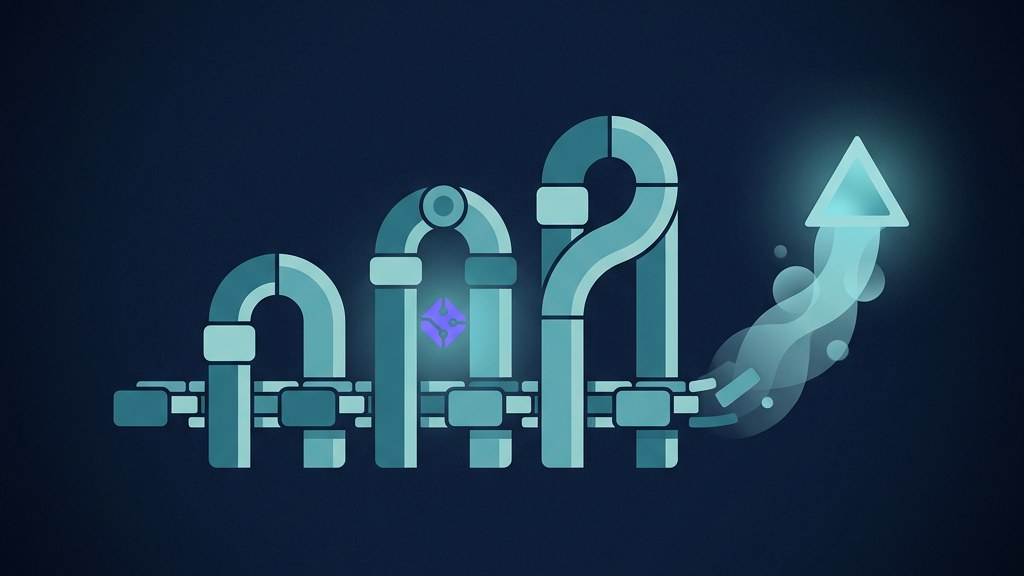
Automated Company Launch Pipeline: Branding, Legal Setup, and a Live Site in One Run
An automated company launch pipeline is a system that takes a new business from an idea to a live, branded, sellable product without a founder or agency manually coordinating research, design, legal setup, and site deployment as separate steps. LinkWorld runs this as one resilient, phase-skipping workflow: it researches the market and positioning, builds a brand identity, detects the legal-entity structure the business needs, configures the sales funnel, deploys the live site, and generates the video and image creative that fills it — all under the same audit trail and approval gates as the rest of the platform.
For founders standing up a new brand and agencies launching a client's product line, this matters because the bottleneck in a launch is rarely any single task. It is the handoff between tasks — the week lost waiting for a brand deck before the site can start, the funnel that ships before the legal entity backing it is confirmed, the campaign creative commissioned separately from the site it has to match. A pipeline that chains these steps removes the handoff, not just the individual task.
What "Phase-Skipping" Means in Practice
Most launch checklists assume every step happens in order and every step succeeds. Real launches don't work that way: sometimes a legal entity already exists and detection can skip straight past incorporation research, sometimes a brand identity is supplied up front and the pipeline should use it rather than regenerate one.
A phase-skipping pipeline checks what already exists before running a phase, and moves straight to the next unfinished step instead of forcing a rigid sequence. That is what makes it resilient rather than merely automated: a partial failure or a pre-supplied input in one phase does not block the phases after it.
The Phases, in Order
Research. Before any branding or copy is written, the pipeline researches the market position, the competitive landscape, and the customer the business is actually selling to — the same research discipline behind LinkWorld's own positioning work, applied to the new company.
Branding. A visual and verbal identity is generated from that research: name, voice, and visual direction consistent enough to carry across the site, the funnel, and every piece of creative that follows.
Legal-entity detection. The pipeline determines what legal-entity setup the business needs or already has, so the site and funnel that follow are built against a business structure that actually exists, not a placeholder.
Funnel setup. The conversion path — how a visitor becomes a customer — is configured against the researched offer, not bolted on after the site is live.
Site deployment. The branded site goes live, built from the same research and identity as every other phase, rather than assembled separately by a different team on a different timeline.
Video and image generation. Creative — hero imagery, product visuals, video — is generated to match the brand identity already established, so launch-day creative doesn't visibly disagree with the site it sits on.
Why This Is Hard to Replicate
Each of these phases exists as a standalone tool somewhere. What is difficult to replicate is chaining them into one pipeline that shares context across every step — the brand identity that a design tool alone can't propagate into legal-entity detection or funnel copy — and that stays resilient when a phase is skipped or a step fails partway. That cross-subsystem integration, not any single phase, is the actual differentiation.
It is also why this runs under the same governance model as the rest of the platform. A pipeline that touches legal-entity data, live site deployment, and ad-facing creative is a pipeline that needs an audit trail and approval gates, not just automation for its own sake — every phase transition and every generated asset is logged, so a founder or agency can see exactly what the pipeline did and why, rather than receiving an opaque, already-published result.
Who This Is For
Founders standing up a new brand without hiring a full launch team, agencies running multiple client launches in parallel, and internal venture teams inside a larger company that need a new product line stood up quickly without losing governance over legal and brand decisions. In each case, the pipeline is priced per launch or per milestone — a one-off project cost rather than an ongoing subscription — with an optional retainer for teams that want the same pipeline to keep running their creative and marketing output after launch.
Frequently Asked Questions
What is an automated company launch pipeline?
It is a system that chains research, brand identity creation, legal-entity detection, funnel setup, site deployment, and creative generation into a single automated workflow, rather than requiring a founder or agency to coordinate each of those steps separately with different tools or teams.
Does the pipeline replace legal advice or incorporation services?
No. Legal-entity detection identifies what structure a business needs or already has so the rest of the pipeline builds against an accurate business structure — it does not replace filing incorporation paperwork or legal counsel.
What happens if a phase fails or an input is already provided?
The pipeline is phase-skipping: it checks what already exists before running a step and moves to the next unfinished phase instead of forcing a rigid, all-or-nothing sequence, so a partial input or a failed step in one phase does not block the phases after it.