EU-Sovereign Multi-LLM API Gateway: What It Is and How It Works
What an EU-sovereign multi-LLM API gateway actually means: one OpenAI-compatible endpoint routed to EU-hosted models plus frontier models, with embeddings, RAG and batch built in — and what applying for Early Access looks like today.
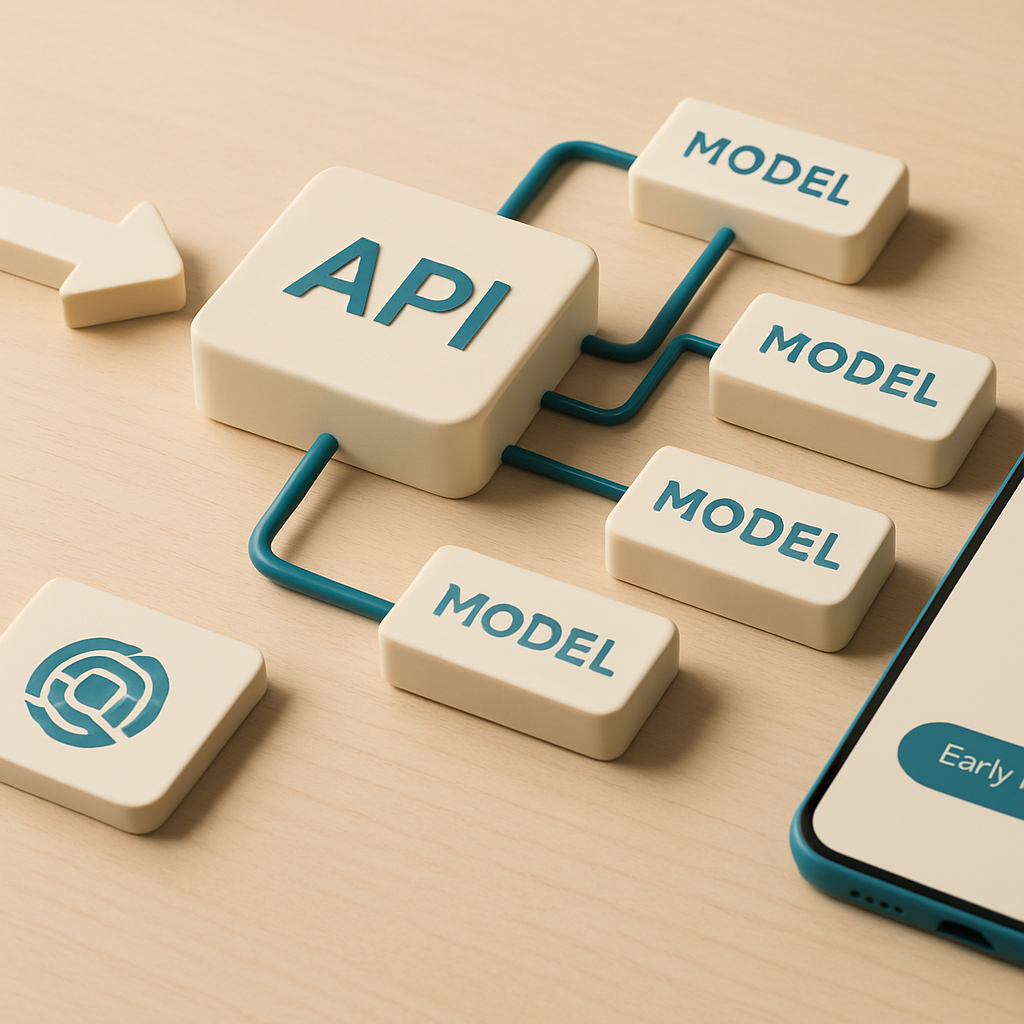
EU-Sovereign Multi-LLM API Gateway: What It Is and How It Works
In one sentence: an EU-sovereign multi-LLM API gateway is a single, OpenAI-compatible endpoint that routes your calls across a menu of EU-hosted models and frontier models, adds embeddings, retrieval and batch as first-class operations, and meters everything per tenant instead of billing by seat — Linkworld's Platform API is one implementation of this, currently in Early Access.
If you're evaluating where to run your product's LLM calls, "gateway" is doing real work as a term. It isn't a wrapper around one vendor's API — it's a routing layer that sits between your application and several models at once, so a single integration point can serve requests that would otherwise mean maintaining separate credentials, request formats, and failure-handling code per provider. For a European team, the second requirement layered on top is sovereignty: knowing which jurisdiction the data actually crosses when a request goes out, not just which brand is printed on the invoice.
Developer API Gateway: Multi-LLM, Embeddings, RAG, Batch
A gateway earns the name by covering more than chat completions. Linkworld's Developer API gateway is built around four operations a production integration typically needs, all through the same interface:
- Multi-LLM routing — an OpenAI-compatible endpoint that reaches a menu of EU-hosted, open-weight models plus frontier models through the same router, so switching the target model is a request parameter, not a new integration.
- Embeddings — vector embedding generation as a direct API operation, not something you have to stand up separately before you can build retrieval.
- RAG — Managed RAG handles embeddings, storage and query-time retrieval as part of the same platform, so a retrieval-augmented feature doesn't require you to operate your own vector database alongside the model calls.
- Batch — batch-style processing for workloads that don't need a live round-trip per request, so high-volume jobs aren't forced through the same request path as interactive traffic.
The point of grouping these under one gateway isn't consolidation for its own sake — it's that a real product usually needs several of these at once (a chat feature backed by retrieval over your own documents, for instance), and stitching that together across separate vendor APIs is where most of the integration cost actually sits.
EU Hosting and Sovereignty
"EU-sovereign" is a claim about where processing happens and who can compel access to it, and it's worth being precise about what that means for a gateway specifically. The models available through the gateway run on EU-hosted infrastructure, which is the property that matters if your own compliance obligations require you to state, concretely, which jurisdiction a customer's data is processed in when your product calls an LLM. That's a different question from "is the company that built the gateway European" — it's about the infrastructure the request actually touches, which is the layer a gateway sits directly on top of.
Multi-LLM Architecture: One Router, Several Models
The architectural choice underneath a multi-LLM gateway is routing rather than binding: your integration targets the gateway, and the gateway resolves which model actually serves a given request. That decouples two things that are usually welded together in a single-vendor integration — your application code, and the specific model answering it. In practice that means:
- You can pick a smaller, EU-hosted open-weight model for cost-sensitive or high-volume calls, and a frontier model for calls that need it, through the same request shape.
- Comparing models for a given task — quality, latency, cost — is a parameter change, not a rewrite.
- You are not contractually or technically bound to a single provider's roadmap, pricing changes, or deprecation schedule for the models your product depends on.
This is the same architectural pattern that underlies Linkworld's own governed automation engine — a governed AI operator that itself runs on multi-LLM routing rather than a single model dependency, so a team building on the gateway is building on the same infrastructure a production governed-AI system runs on, not a lighter-weight side project.
Applying for Access
The Platform API is in Early Access. There is no instant, self-serve API key today — access starts with applying and an onboarding conversation, not a signup form you complete and get credentials from in the same session. If you're scoping an integration timeline, plan for that step rather than around a same-day key. For the full breakdown of how usage is priced once you're in, see how the Platform API's usage-based pricing works.
Frequently Asked Questions
What is an EU-sovereign multi-LLM API gateway?
A single, typically OpenAI-compatible API endpoint that routes requests across multiple models — EU-hosted open-weight models and frontier models — while keeping the processing on EU-hosted infrastructure, instead of binding your integration to one vendor's API.
How is this different from calling one model provider directly?
Calling a provider directly ties your integration to that provider's request format, pricing, and model roadmap. A gateway decouples those: your code targets the gateway, and the model actually serving a request is a routing decision, not a hardcoded dependency.
Does the gateway include retrieval (RAG) and embeddings?
Yes. Managed RAG covers embeddings, storage and query-time retrieval as part of the same platform, and batch processing is available for workloads that don't need a live round-trip per request.
Can I get API access today?
The Platform API is in Early Access. Self-service key issuance isn't available yet — access starts by applying, followed by an onboarding conversation, rather than an instant signup.
Is this the same infrastructure Linkworld's own product runs on?
Yes — the gateway is the same multi-LLM routing infrastructure underneath Linkworld's governed automation engine, not a separate product built on different foundations.